Hello folks. New video on YouTube.
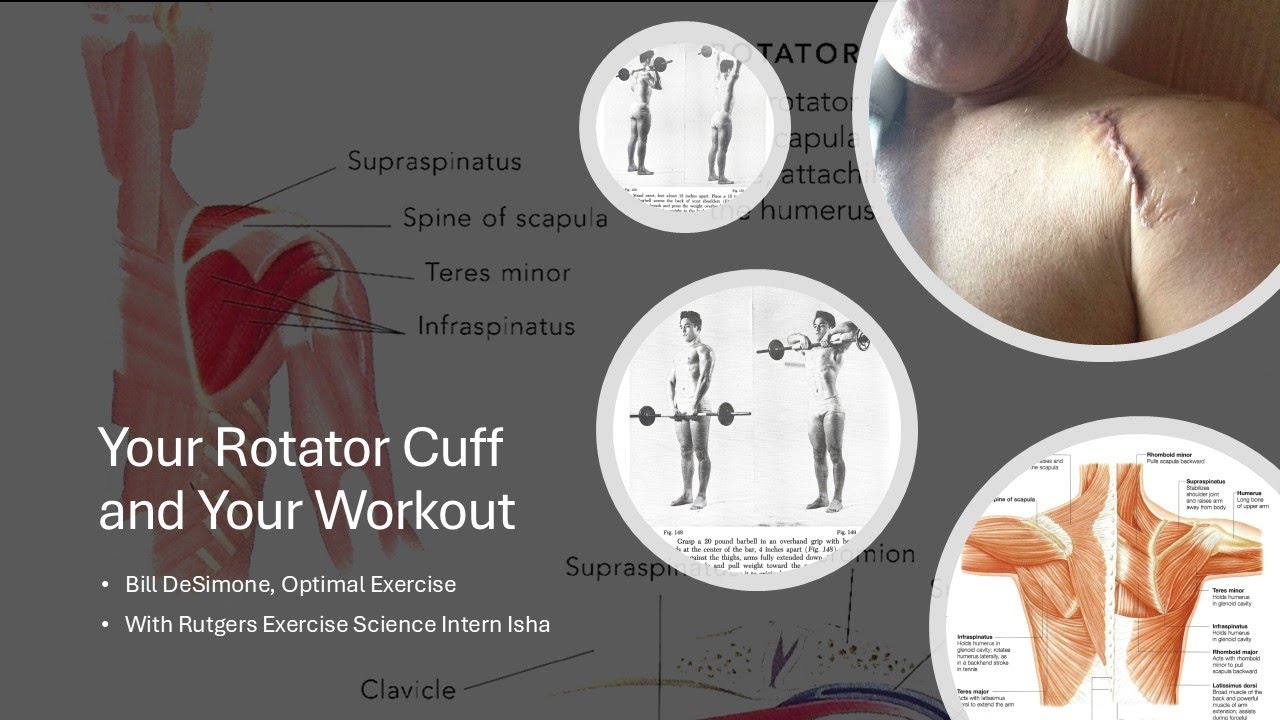
Sort of goes with Exercise Designs Healthy Shoulders and Vintage Shoulder Routines on the same channel.
Enjoy!
Hello folks. New video on YouTube.
Sort of goes with Exercise Designs Healthy Shoulders and Vintage Shoulder Routines on the same channel.
Enjoy!
Both shoulders with pain so bad I had trouble sleeping on the shoulders. I could not throw a ball. I could do no overhead work.
DeSimone straightened my views of training right up. No overhead pressing, no laterals, no upright rows. And Kirsch dead hangs.
No shoulder pain after this, however it took time.
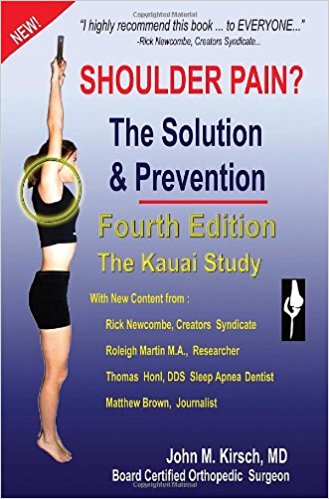
Well, fwiw, I’ll stand next to my assisted chin station and hold on to the bar with my feet still on the floor, and yes, it does seem to relieve some tension in the shoulders. But my point about not letting the weight “migrate your humerus upward” on each rep still stands. Even orthopedic surgeons want to be influencers these days, I guess. Notice that none of the “new content” is from other orthopedists, physical therapists, athletic trainers, etc.
Just curious to those who have contributed in the thread so far, what caused your shoulders to go bad and how old were you when they went south on you?
Turning 40;) thats when i ruptured my biceps and triceps, so two fewer muscles stabilizing the shoulder. Then in 2016 i fully avulsed the subscapularis on the other side, so that led to repair, debridement, decompression, etc.
Holy smokes that sounds brutal. Did they both rupture at the same time? What, in your view, led to the ruptures(like any warning signs ahead of time and then the precipitating incident)?
The triceps was easy: fell skating. Legs went out, landed flat on forearm, pain ensued. The biceps just popped during a slow curl one day, felt a pop and found a black blue golf ball where my biceps was. The subscap, i put my shoulder in the worst position possible and tried to force something. That kind of backfired;)
no, no warnings, but that all led me to so the research for Moment Arm Exercise, Joint-Friendly Fitness etc.
I never had a problem with my shoulders due to lifting, it was always some external event that caused it.
Left shoulder was an inferior dislocation when I was setting lines for a high ropes course (32) and grabbed a rope when I fell, right shoulder was a posterior dislocation due to a seizure (39).
I credit being in the gym for both minimizing the damage and being able to recover quicker.
Those videos are great @billdes, thanks for sharing.
Much appreciated Brant. And oww
I have a history of rotator cuff pain going back about 35 years. Per orthopedic doctors and chiropractors, the natural gap in the joint isn’t quite what it should be and so impingement results. (Sort of like why I wear glasses; the curvature of my eye isn’t what it should be.) I was told I was borderline on whether surgery would help. I have been to a physical therapist, which helped, and now rotate the following exercises in my routine:
external and internal rotator exercise
ShoulderHorn Rotator Cuff Training Device
Shoulder Reliever
I also do some stretches found here:
Treat Your Own Rotator Cuff Paperback
by Jim Johnson
True story
To get a better look at how my rc joint moved, the doctor ordered what I’ll call a high contrast x-ray. I don’t recall what it is actually called. I was in a dimly lit room, lying on my side on an exam table. A nurse injected iodine (for the contrast) into the joint, injecting through the upper back/shoulder area. They then had an x-ray pointed at the joint and had me do various movements. When they were done, the nurse returned and was wiping excess iodine off my back. I said, you’ll never get all the yellow off. She said, yes I will and started to really scrub. Finally she stopped and asked, is that a tattoo? I laughed pretty hard. Fortunately she had a sense of humor also.
At the time I had a small sun, all yellow, tattooed on my upper back/shoulder. I guess she didn’t notice it earlier as it was subtle and the room was dim. The tattoo has since faded away.
I’ve used all those except for the shoulder horn and shoulder reliever, i use the bodyblade instead.
Cybex made a weight stack rotator cuff station, very hard to find and probably not better than what you have here.
Bill,
What is your opinion on Dr. McGuff’s video on the rotator cuff?

If it matches what i said, i like it alot;)
Could be the best thing he’s ever done.
I’ve watched a ton of rotator cuff videos; they’re all variations of common themes.
This guy is the only one who stands out as different:
Add this one to show a young guy:

For me personally, this exercise alleviates rotator cuff pain that crops up for whatever reason (for old people apparently LOL); works for me even with zero resistance:

Seriously good take.
Well, fwiw, I’ll stand next to my assisted chin station and hold on to the bar with my feet still on the floor, and yes, it does seem to relieve some tension in the shoulders. But my point about not letting the weight “migrate your humerus upward” on each rep still stands. Even orthopedic surgeons want to be influencers these days, I guess. Notice that none of the “new content” is from other orthopedists, physical therapists, athletic trainers, etc.
——————
Thanks a bunch!
I have the shoulder/arm book ! I read the shoulder section (very detailed and technical) , as I read the grip/forearm section first.
I will amend my training immediately. Thanks.
Question ?
On the shoulder/ back row with the Freedom Trainer, are the arms extended fully?
“On the shoulder/ back row with the Freedom Trainer, are the arms extended fully?”
good detail question. I think so. Extended elbows with the
shoulders forward, then retract the shoulders and bend the elbows, i think is a good flow. But the shoulder retraction is the priority.
Thanks
Interestingly, no one mentions the cardiovascular system when discussing injury prevention/protection of these small shoulder joint muscles. Abundant fat storage is used and processed by mitochondria in these predominantly slow twitch fibers of the shoulder joints.. Due to the constant need of these supportive muscles, they are constantly being used, thus fat is the predictable fuel. A finely tuned cardiovascular conditioning system nourishes and supplies oxygen to prevent injuries due to fatigue of slow twitch muscle fibers.
P.S.
Here come da Judge (anti-cardio HiTers)