This is awesome
3/11/2017
entered gym at 10:10AM
Squat
100kgs x1
117.5kgs x1
135kgs x1
110kgs x1
Close Grip Bench Press
60kgs x3
70kgs x3
80kgs x3
90kgs x3
Rows
rows in the extreme cheater’s way
60kgs x3
80kgs x3
110kgs x3
120kgs x3
130kgs x3
140kgs x4
60kgs x10
Pull Ups
x5x5
at 3:40PM
ran 400m in 1:30
was gonna go for 5 more rounds but I had a minor hamstring pull or something
Tyre Flip
200kgs, EMOM 10 Minutes, 3 reps
note to self: don’t double hard session in a day, dumbass
1 Like
Depends. If you eat a lot/catch a small nap then it’s fine. I once did 3 sessions in 24 hours during my summer break and crushed every session.
Eh, probably because I’ve been cutting down on my naps. Been trying to regiment my sleep, I usually sleep round 10-11 and wake at 5:30.
1 Like
4/11/2017
BJJ
First Brazilian Jiu Jitsu session. Started at 1:00PM ended off at roughly 4:40PM?
Since I’m basically new to this, I was just getting my ass whooped the entire time. Did manage to get 2 submissions today though.
Spent the first hour or so practicing the arm bar and the overhead flip to mount.
Did a bunch of 6 minute rolls for the rest of the time.
wanted to gym after that but eh, I figured I’d give myself a tiny break
2 Likes
Bro, WTF? When did this happen?
You reading @twojarslave’s log?
I work with a dude that is a Purple belt at Matt Serra’s BJJ here on Long Island and he’s invited me several times to intro rolls at the school but I’m too much of a pussy to go. I’m a green belt in Kempo, and kind of want to get to black in that discipline before doing BJJ but I also see BJJ as much more practical.
Kewl shit man.
2 Likes
I’ve browsed through his log and I’m aware he started BJJ not too long ago. As for my main influences, it is probably because I’ve been listening to a ton of Jocko Willlink’s podcast(which I highly recommend btw) and it pushed me towards BJJ. I’ve one friend who’s been telling me bout BJJ for quite some time and I just brushed it aside. Did some research and decided to just go for it.
3 Likes
You’ll be glad you took the plunge. I’ve been doing BJJ for about 8 months now. The only advice I’d like to share with anyone new to BJJ is sort of a buyer beware statement.
Generally speaking, there are two types of BJJ. Street and sport. The techniques for winning a street fight have been largely unchanged for the last few decades, and it is these techniques that the Gracies used to put BJJ on the map. This is an impolite brand of jiu jitsu made for winning fights, plain and simple. It is VERY effective when taught as a self-defense system.
Sport jiu jitsu is a gorgeous game that is constantly evolving. The goal of this training is to win in competition, where there are rules that shape the tactics being used. It is these rules that make a move like the “donkey guard” effective in competition. You won’t find the donkey guard anywhere on the curriculum of a school that teaches you how to survive a violent encounter, because it would be dumb and you’d get your ass whooped.
https://www.bjjheroes.com/wp-content/uploads/2015/03/Donley-Guard.jpg
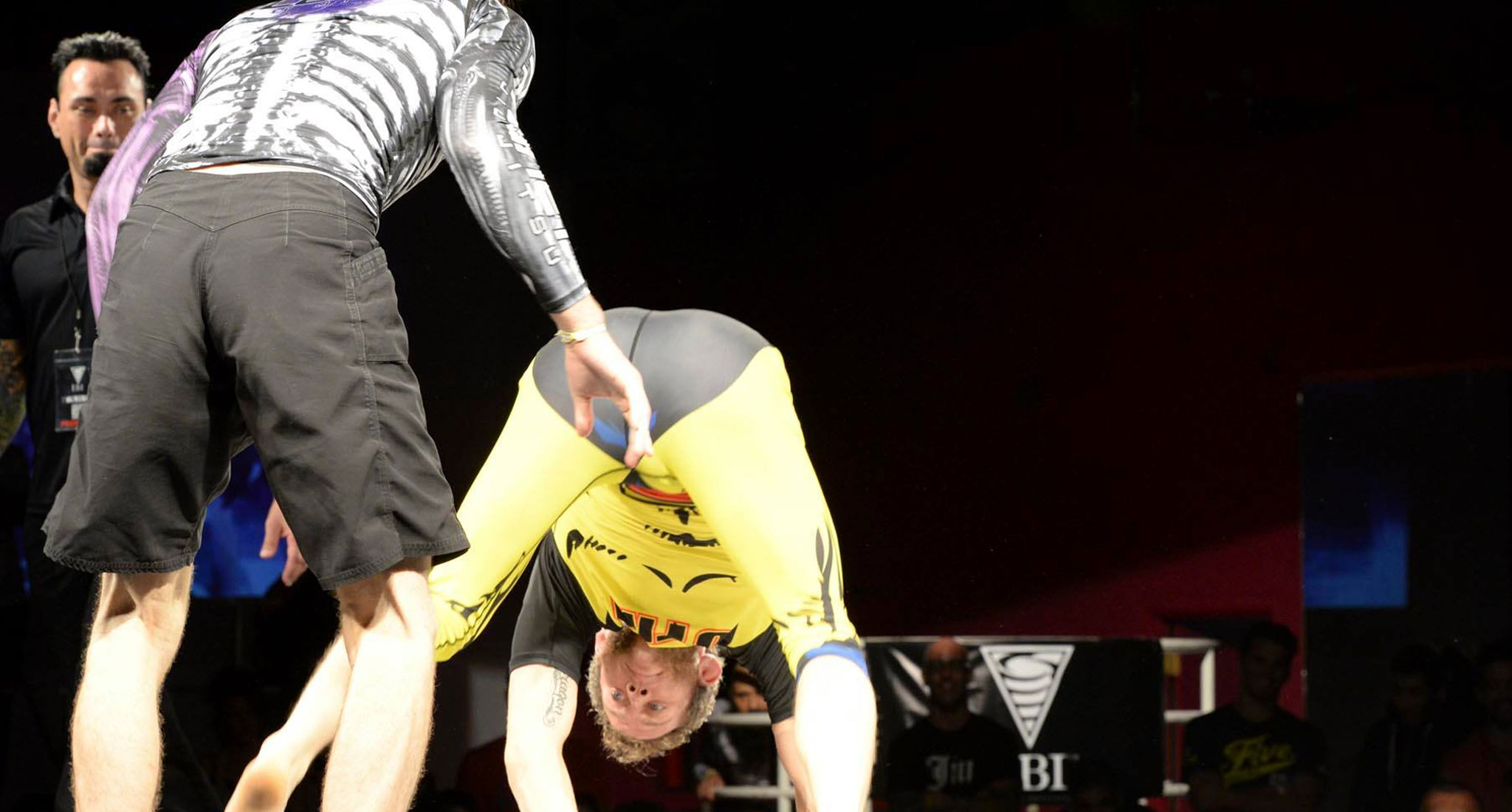
There’s nothing wrong with pursuing sport jiu jitsu, but this is where the “buyer beware” comes in. Generally speaking, schools don’t necessarily advertise which style they teach. There’s plenty of overlap between the two, but you can also end up with blue and even purple belts at a sport school who would get their ass handed to them in a street encounter. This is nearly unimaginable for the traditional standards of what a blue belt should be able to do, but it is increasingly common.
If you want to be able to handle yourself off of the mats, definitely seek out a school that teaches BJJ as a self-defense system first. Of course, if you find a school that’s teaching you combatives, chances are they’ll be churning out good competitors too.
If you just want to roll and compete with no real concern with the self-defense applications of what you’re spending your time learning, seek out a school that produces good competitors, or just seek out a school with a vibe you like.
There’s no right or wrong answer, so long as you don’t train for years to become an expert in competition grappling with the expectation that pulling guard, going for the berimbolo and maybe flashing your belt color is a viable strategy in a street fight.
Good luck, I’ll be following along!
3 Likes
Sounds cool, Ben. Fighting sports have always seemed really cool to me.
I think there’s a good amount of both at the school which I’m training at. Spoke to a few of the people who’ve been training there for a while and I was told that Nogi is where most of the “self defense” guys go to while Gi is for the “competitive” guys. They’re open 6 days a week, 4 Nogi days and 2 Gi days so… Yeah.
That being said though, I’m going to get a Gi and go for them Gi days since I’m sure there’ll be carryover between Gi and Nogi and if anything, it’ll help me pick up more, faster.
The funny thing is, they always seemed cool to me but I never really liked the idea of getting hit in MY face for sport. Played rugby in my mid teens and that left me a life long scar on my face so I can only imagine what’ll happen when the entire point of the sport is to hit someone in the face.
Wicked.
Just another point of “buyer beware”, just about any BJJ school will tell you that they teach self-defense, but the standards are far from universal. This school may very well have all of that covered, but that isn’t always easy to discern when you’re starting out. Here are a few red flags to look for.
If you’re there for a few months and nobody’s shown you how to get out of a headlock when standing, how to break out of a bear hug or told you anything about when you want to be getting up in base or a technical stand-up (aka getting back on your feet efficiently), you’re probably training at a sport school. If you’re learning x-guard techniques before anyone’s told you how to move your feet when you’re standing, you’re probably at a sport school. Fights almost always start on the feet, and self-defense Jiu Jitsu schools spend a lot of time addressing this. If you’re not doing any stand-up work in class, you’re not learning self-defense.
Again, nothing wrong with a sport or casual school if that’s what you’re after. If you’re a person who wants to learn self-defense on the street with no rules, well, you might be best served to seek out schools that teach this first. That’s my opinion anyway.
Also, both gi and no-gi can have self-defense applications as well as competitive applications. A Gi is just a piece of heavy clothing, which people wear for over half the year where I live. No Gi is just the absence of such clothing. Both very applicable for self-defense. Most MMA competitors will obviously be training to become proficient in no gi, but MMA is a sport with rules that shape training priorities.
My little screed aside, I still think it is all good medicine no matter which path you go down. I’ve met so many rad people through BJJ. We all have our own training priorities that are nobody’s business but our own. Seek out a good tribe that you fit in with, dig in and enjoy yourself!
2 Likes
The biggest turn off for me from contact and combat sports is the brain injuries. They are basically the only injuries that actually worry me, the rest are just normal things you get from sports.
2 Likes
Or you could just learn Judo.
Impact to the head doesn’t happen that often in the grappling martial arts like BJJ. I’ve done Judo on and off for years and a bit more seriously for two years and the only genuine head impact incident I’ve had was when things went a little south during a hectic sparring session. My partner threw me while we were too close to the wall and I had no room to maneuver. Basically landed head-first onto the ground. Could actually have gotten pretty ugly if the angle was bad, but fortunately I landed on what I recall to be the top of my skull, so my entire body took the impact.
THAT BEING SAID… people intentionally landing on their head so as to prevent an ippon is common during serious competitions and occasionally it leads to some really bad results.
1 Like
Some would say the BJJ is just a re-branding of Judo as it existed in the early 20th century, before it became a sport with a huge set of rules that shaped the training. Much of my mat time is devoted to Judo concepts and takedowns, although I still struggle with the Japanese terminology. I’m not too familiar with Judo outside of that context, but do schools exist that train how to fight first, without prioritizing competition in the sport of Judo?
This is what I mean by rules shaping the way we train. Intentionally landing on one’s head may very well be a viable competition strategy, but it is a poor choice of action if you’re in a real fight.
I have never trained BJJ, so I don’t know much about it and its culture. I have posted on another forum that has a dedicated BJJ forum and so have some idea about it based on that, but that’s about it.
You need to define learning how to fight.
I can tell you that just about every brown belt under the age of 50 that I know can throw you and immediately follow it with to the ground where they can either move into a pin/choke/armbar. Folks over 40 may not have the requisite physical capability to go straight to the ground. I suppose they can just do the time-honored step of following through the throws like harai-goshi and land on you, but even then you need to scramble pretty quick.
Any Judo guy who competes on even a local level and has a brown belt of nikyu(second grade or however you want to translate it) will be capable of the above. It should be drilled into their head to move straight into a pin after a throw because you don’t know whether it’ll be an ippon or not.
I emphasize competition here for a reason- it’s the only place where people MUST go at it at full-throttle, or else you’ll lose immediately. Sparring doesn’t count, unless you’re an idiot white belt who thinks they’re awesome and gets a dan-grade guy to lose their cool and they start throwing you at 100%.
As far as I’m aware, any school that has an active competition team will teach you the basics of throwing, pinning, and choking before you get whatever is the belt above white in your organization.
Now… does this mean that they know how to fight? I don’t think so. Much like how competitions are a completely different beast from sparring, using your martial art in a real self-defense situation is different from using it in a sporting environment.
I get what you’re saying in regards to sport BJJ vs self-defense BJJ but, as I understand, it’s mostly a gimmick. A sport purple will know the basics as well as a self-defense purple. If he doesn’t, he’ll get mauled by people who know the basics better than he does. I believe there is something to be said for what is emphasized during training and I think a sport white may do poorly against a self-defense white(assuming equal mat time) simply because the self-defense white may have trained more aggressively/was taught to focus on the important basics.
But a purple-belt BJJ guy, regardless of what school they learned BJJ in, is someone I’m not really interested in ever getting into a confrontation with. Because the purple belt is supposed to mean that the person who holds that belt is quite good in BJJ, period. It’s not like a simple mount of your choice into armbar, probably one of the core/basic things in Japanese grappling, is not something that is taught in sport BJJ because it’s not flashy enough.
Now, as far as teaching stand-up in a BJJ class… BJJ is effectively the opposite of Judo, in that it has moved to the point where people expect it to be mostly ground-based grappling. Judo is expected to be mostly stand-up based grappling. It doesn’t make much sense to expect a BJJ blue/purple belt to know much about stand-up because they simply won’t use it in competition. It’s sorta pointless for them to learn it.
I’m willing to bet that the guys who are teaching you stand-up at your school has dan-grade belts in Judo or have themselves been trained by dan-grade belts in Judo (though I don’t think I’d encourage learning from someone who doesn’t hold a dan-grade belt themselves…)
If your school spends more time teaching you stand-up than ground grappling, then it’s a little difficult to call it a BJJ school. It’s either a grappling school that doesn’t know how to market itself, or it’s a judo school that is marketing itself as a BJJ school.
And that’s probably your best bet- if you really are looking to get a comprehensive education in grappling-split your time between a serious competition judo school and a BJJ school… Or just go to a serious competition judo school cause you’ll probably learn enough ground-grappling to dominate anyone who isn’t a college-level wrestler/has trained BJJ.
OR
OR
You’re not using a gi and so everything I wrote just now is irrelevant.
I don’t know! Do you train in a gi?
I don’t mean to offend, but this is very clear from reading your thoughts.
Having trained under an instructor who actually does self-defense first as the white belt curriculum and an instructor who do not have that focus on the curriculum, I can tell you with great certainty that the difference is significant. It is this difference that I wanted to make sure our young trainee @Benanything is aware of.
Having worked for two years as a bar bouncer, I’ve been involved in and seen my fair of street fights, so I have a good grasp of the context of what is being taught, as well as the street applicability. I’ve rolled with a number of blues and purples who I’m absolutely certain would not fare well against someone who is less trained but ready for real violence.
Jiu Jitsu IS fighting. It is whatever works in a fight. Techniques from wresting, Judo, Sambo or just kneeing a motherfucker in the face from side control all falls under the mantle of BJJ. The sport came about because its fun, not because training for a controlled event with rules better prepares one to fight for their life. Don’t get me wrong, sparring and competition are vital tools to prepare, but the training philosophy and the techniques being taught can vary wildly between schools.
Here’s some sequences taught by my instructor’s instructor. You can spend years at some schools and never get taught how to do a proper side clinch and prevent your opponent from punching you in the face. THIS is self-defense jiu jitsu.
Don’t take my word from it. Listen to one of the baddest motherfuckers ever to walk the planet.
1 Like
Sorry to hijack your log @Benanything! Hopefully you found it either helpful or at the very least entertaining!
1 Like
Wait, so which is it you’re training? Jiu-jitsu or self-defense Jiu-jitsu or Brazilian Jiu-jitsu? Sorry, but your terminology is all over the place =D
Cause you’re right- there are clearly differences in the context of what you’re being taught. That’s why I wouldn’t be confident applying what I learned at Judo in a self-defense situation. I’ve never drilled it in a situation where I got punched/kicked, and certainly never in a high-stress environment.
But most people do not expect to train with strikes or do a lot of stand-up when they hear about a BJJ school. Classifications do matter. When you train to deal with strikes, do you actually have people trying to strike you, or is it more of a kata-esque performance?
As far as I’m aware, training for violence is a mentality and practice. You could learn all you want about doing X and Y in a self-defense situation, but you’ll probably have a hard time applying it unless you’ve drilled it against people who are actually trying very hard to punch you. If you didn’t need to train yourself to move under a dangerous situation, why do modern-day soldiers and police spend a lot of time drilling things? It’s all the same.
I think you’d disagree, but I’m willing to bet my money on the sport purple over the self-defense blue in a scuffle. The sport purple has more practice time and probably has been in some “high-stress” environments if they’ve participated in several competitions.