On the edge of town, Fitzgerald saw a sight “that has never left my memory. It was a picture story of the death of one 82nd Airborne trooper. He had occupied a German foxhole and made it his personal Alamo. In a half circle around the hole lay the bodies of nine German soldiers. The body closest to the hole was only three feet away, a German grenade in his fist. The other distorted forms lay where they had fallen, testimony to the ferocity of the fight. His ammunition bandoliers were still on his shoulders, empty of M-1 clips. Cartridge cases littered the ground. His rifle stock was broken in two. He had fought alone and, like many others that night, he had died alone. “I looked at his dog tags. The name read Martin V. Hersh. I wrote the name down in a small prayer book I carried, hoping someday I would meet someone who knew him. I never did.”
FLETC is probably one of the few places 5.11’s are camouflage. From doing surveillance, the points about matching the natural flow are spot in. We’ve hid in plain sight in board shorts and flip-flops; blue jeans/flannel and clean kicks; business suits while carrying gym bags. Your behavior matters as well.
You don’t get to pick when the bad shit goes down. When it hits, will you be ready? Train hard, stay sharp, and always be prepared. Stay ready, so you never have to get ready
To “Crash Kathy” whose skill at defusing IED’s saved many a life:
On June 12, 1948, President Harry S. Truman signed into law the Women’s Armed Services Integration Act allowing women to serve as regular members of the military. On May 5, 2017, Representative Victoria Neave filed House Bill 2698, establishing Women Veterans Day.
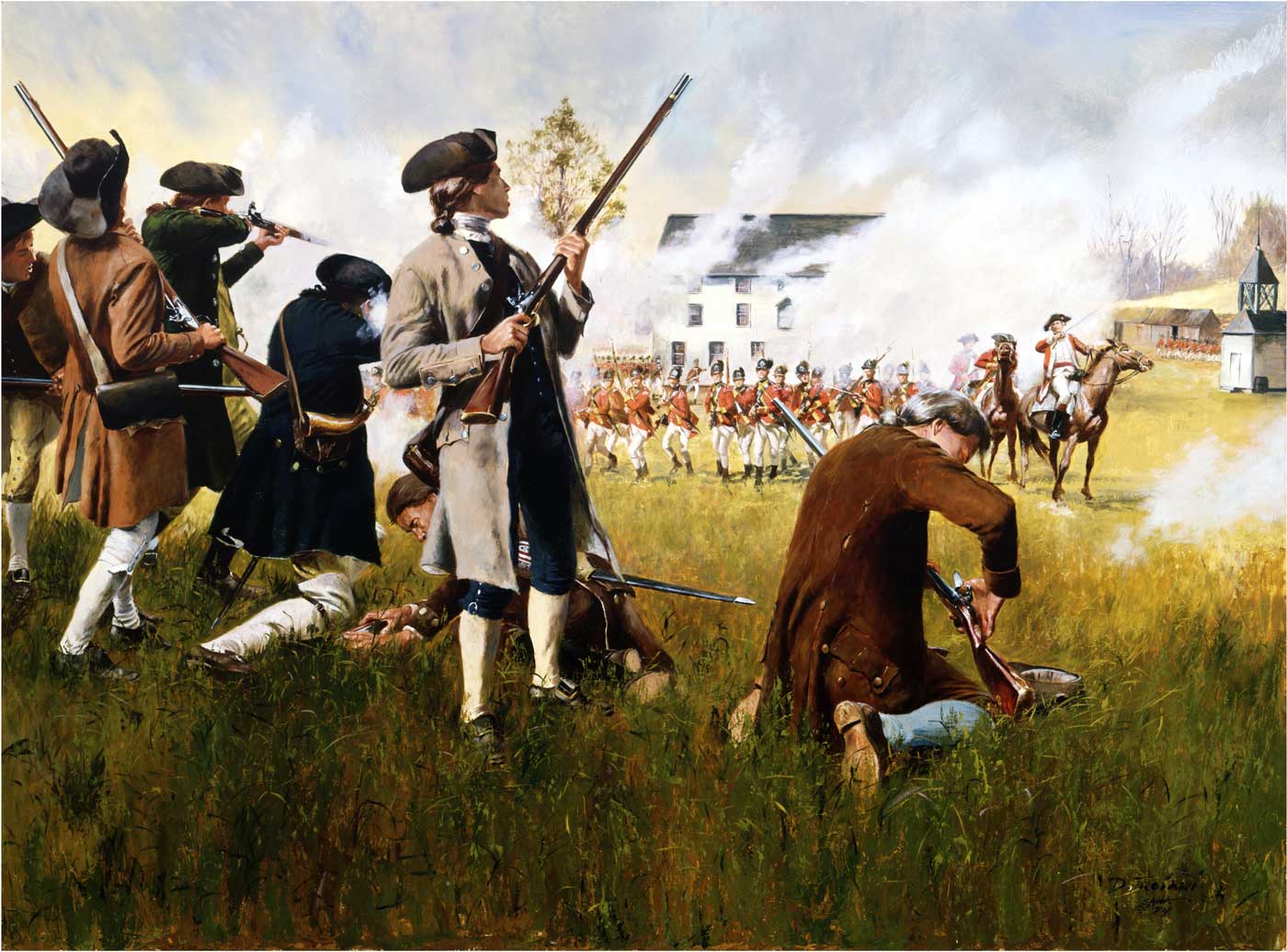
America’s Revolutionary War began on 19 April 1775 with exchanges of musketry between British regulars and Massachusetts militiamen at Lexington and Concord. As their fellow citizen soldiers from New Hampshire, Connecticut and Rhode Island responded to the alarm, a state of war existed between the four colonies and the British government. Called the Army of Observation, a force of New Englanders surrounded Boston and had the British troops who occupied it under siege, but they needed help. They appealed to delegates who represented all thirteen colonies to join them in the struggle for American liberty.
When the delegates to the Second Continental Congress convened in Philadelphia on 10 May, they soon learned that armed men commanded by Ethan Allen and Benedict Arnold had captured the British forts at Ticonderoga and Crown Point on Lake Champlain in New York. The constitutional crisis, in which Americans sought a redress of grievances from the British king and Parliament, had become open hostilities. The delegates realized that even though many desired reconciliation, they would now have to address the new military situation. The Congress took the next step that eventually transformed a local rebellion into a war for independence when it established the Continental Army: the force we know today as the U.S. Army.
Standard Operating Procedures (SOPs) are often said to be written in blood because it takes a catastrophic failure or a fatality before they’re enforced. This is a stark reminder to all of you, especially the leaders, to be progressive and forward-thinking. Don’t wait for tragedy to strike before taking action. Just because a tactic works in theory and hasn’t been tested under fire doesn’t mean it will save lives when it counts. The mindset of ‘this is the way we’ve always done it’ is a recipe for disaster and a failure in leadership.
Doesn’t matter if you live in a metro area or a warren of caves, know you local entry and exit points.
[Having a deep understanding of the local vicinity of your immediate neighborhood], starting from your own home and extending outward, is crucial for safety, security, and mobility.
Familiarity with your surroundings enables you to quickly identify safe routes, escape paths, and secure locations in case of emergencies.
It also helps you recognize potential threats or suspicious activities early, allowing for proactive measures to protect yourself and your property.
Additionally, understanding the layout of your neighborhood enhances your ability to navigate efficiently, whether on foot or by vehicle, ensuring you can move swiftly and confidently during critical situations.
This local knowledge fosters a sense of preparedness and resilience, essential for maintaining personal security and effective response capabilities.
And finally, a shout out to traditional martial arts and a family of instructors:
I think of this exchange between Kirk and McCoy, I first heard as a kid when watching reruns of Star Trek.
[Dr. McCoy ]: Well, that’s the second time man’s been thrown out of paradise.
[Captain James T. Kirk ]: No, no, Bones, this time we walked out on our own. Maybe we weren’t meant for paradise. Maybe we were meant to fight our way through, struggle, claw our way up, scratch for every inch of the way. Maybe we can’t stroll to the music of the lute. We must march to the sound of drums.
Then there’s the advice Kirk gave a 17 year old boy: “Hang on tight and survive. Everybody does.”
In plain English, don’t freeze up when confronted with violence. Think, move and move some more.
Cognitive reframing shifts negative or fear-based thinking into positive or constructive thoughts, transforming potentially paralyzing stress into actionable confidence and strategic clarity, crucial for effective performance in combat scenarios.
Several US military bases are currently under a threat alert. Time for a review:
Situational awareness is very important for being prepared to defend yourself and your loved ones. This can make a huge difference in your performance in a fight if you’re aware of your surroundings. People tend to concentrate more on shooting than they do the other things that will actually make you better at employing those shooting skills. Without situational awareness, you will not know the vital information that using your eyes or hearing will show you. There is a reason soldiers and combat veterans in general come back from combat quiet and are always looking around. It is simple situational awareness that they got in the habit of employing.
[Soldiers]are taught that security is 360 degrees and 100% of the time. This means that your entire surroundings are a threat and you need to watch them. This is to help with spotting a threat before it has a chance to hurt you. When you are watching your surroundings it is important that you keep quiet and quickly scan your surroundings with intense attention to detail. Watch the little things like the location of hands, where eyes are pointed, how people carry themselves, what they are wearing, etc. There is also location scanning that you must be aware of like sources of sound, camera locations, blind spots, locations of exits/entrances, etc. No detail is too small when you are looking around, and you need to be very thorough in your visual scanning.
When looking around, there are four positions that you can use for aiming your head. The first two are 45 degrees to the left and right which will give you a little more than 180 degrees of coverage you’re your eyes. The other two are looking over the shoulders which cover your rear quadrants. This is a very obvious method of checking your rear. Looking around can be as discrete or as obvious as you wish. I employ peripheral scanning in public in order to not make it obvious that I am watching. If I want to look behind me, I will walk past something and pretend to have passing interest in it and use that split second to glance at what is behind me. I highly advise that you not stare since that is all it can take to start a conflict.
Listening to your surroundings is about as important as using your eyes. It gives us good perception of our surroundings such as distance of the source of noise. We must remain quiet and tuned into our surroundings in order to hear those little things that normally go unnoticed as background noise by others. You can learn a lot about your surroundings by just listening to the different sounds. You will find that obnoxious noises will attract attention from everyone, such as a loud rattling cart in the store, revving engines, or crying children. You have to learn to analyze every sound and judge their origin. I typically find that I can use my hearing to cover most of what goes on behind me. This isn’t always feasible, but it is an added method of security that must be used in conjunction with your sight.
With these two senses alone, you can have a pretty good defense from your surroundings. If you take your safety and your families’ safety seriously, you will maintain your situational awareness. There is little to no disadvantages to this, unless you are the one whipping your head around from side to side with your hood up. You can be very discrete and inconspicuous to those around you by using your peripherals and quick passing visuals in order to acquire your visual information. The important thing to remember is that it is not being paranoid, it is being aware and alert to activity around you. This is probably the most important thing you can practice if you want to give yourself the best chance of surviving a fight.