Time to bust out this recipe again. I used organic canned pumpkin this time around (the store was out of non-organic, non-expensive pumpkin). For whatever reason, the organic stuff is runnier, but it did make this a moist pie.
1.5 Tablespoons McCormick pumpkin pie spice blend. Or make your own using hefty dashes of cinnamon plus a little ginger, nutmeg, and allspice.
1/4th Cup baking Splenda or equivalent low-calorie sweetener of choice
1/2 Cup chopped walnuts
DIRECTIONS
Preheat oven to 325 degrees Fahrenheit.
Finely crush the walnuts or give them a whirl in a food processor to make crumbs. This will be your “crust.” Sprinkle the crumbs evenly into an oven-safe pie dish.
Add the rest of the ingredients to a bowl and mix well. Use a whisk and build your forearm strength.
Pour the filling on top of your crust.
Bake for about 45 to 50 minutes until just set. The middle of the pie might look a little wobbly. That’s okay.
Allow to cool then refrigerate for at least 6 hours or overnight. It will continue to set as it gets cold.
Cut into 6 slices and, well, I’d suggest eating it at this point.
If you want to drop the calories even more, just skip the walnut crust. But keep in mind, the average pumpkin pie contains 3840 calories. This one, including the crust, has only 1338 total calories. I’d keep that omega-3 packed crust.
Here’s the macro breakdown per slice, assuming you carve it into 6 servings and can avoid wolfing down the whole darn thing:
This one is a work in progress, but not bad at all as is. Here’s the gist:
Ingredients
• 100% cacao baking chocolate bar, unsweetened (4 ounces typically)
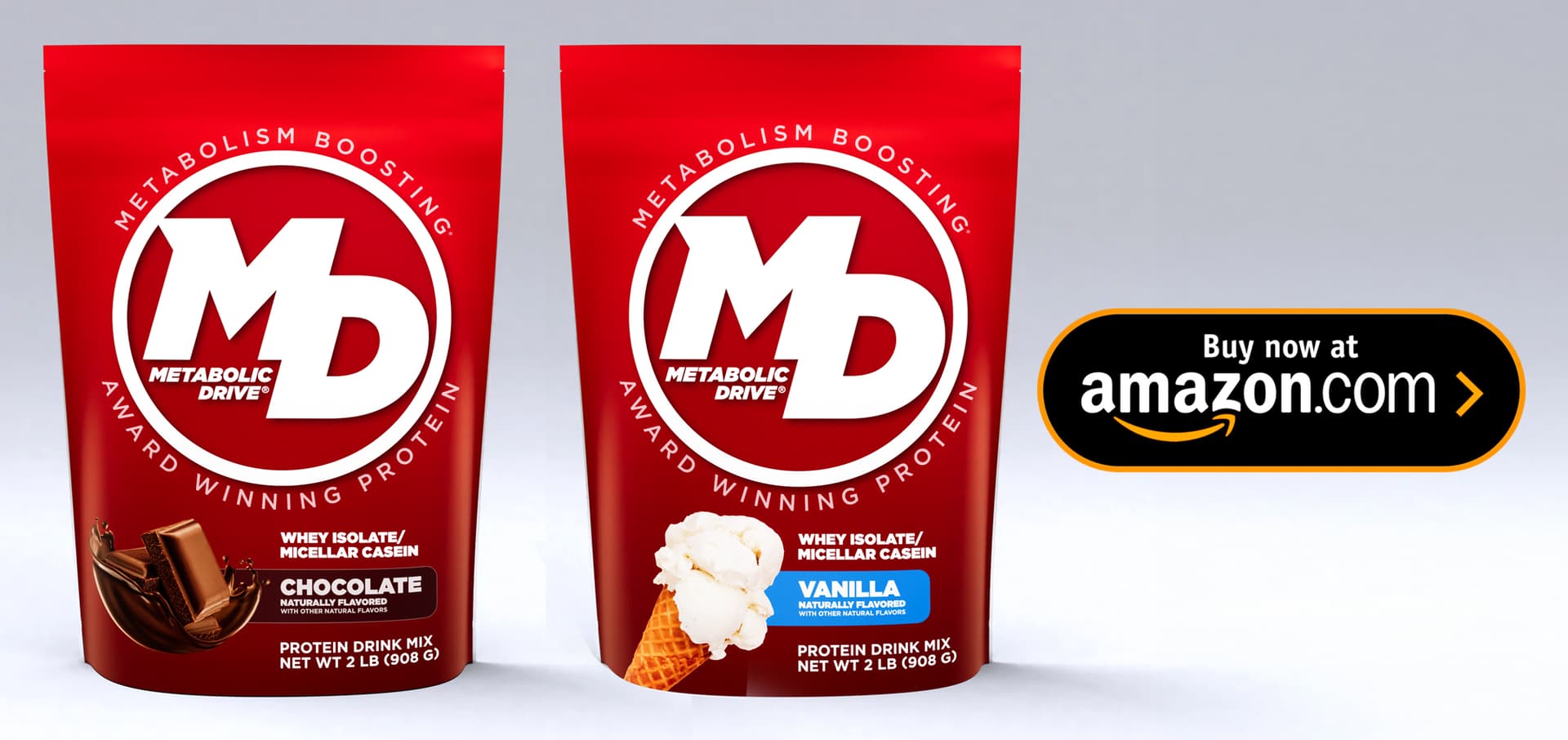
• 2 scoops Metabolic Drive protein
• 1/2 cup PB2 or Naked PB (powdered peanut butter)
• 1/2 cup unsweetened almond milk or whatever you prefer + a tablespoon or so
• 3 rice cakes (I used Lundberg organic because they’re thicker and crunchier)
• 1 tablespoon coconut oil or MCT oil
Instructions
Mix the powdered peanut butter with Metabolic Drive and milk. Add a little extra milk as needed until you get the texture you want (thick).
Chop and melt the chocolate using a spoonful of coconut oil or MCT oil. I use the microwave: 30 seconds, stir, 30 seconds, stir, etc. (Add a little sweetener if 100% chocolate is a little dark for you.) I used a pie dish to make the next step easier.
Always a staple go-to breakfast for busy days! In the original recipe below, I used oat flour, but now I just make it with old fashioned oats. Just as good and one less step or special ingredient.
Slightly different variation of the KETO BREAD recipe. Had a half-cup of leftover cottage cheese and a half-cup of leftover Greek yogurt, so I used that instead of a full cup of cottage cheese.
Verdict: I think full cottage cheese works a bit better than yogurt. Still good though.
Also, anyone else hate a microwave/oven stacked combo unit? Our kitchen was built for one, so that’s our only choice without a major construction project. Do not recommend.
I hate it when people say, “I don’t know how to cook.” Well, do you know how to read? Because, recipes exist. It’s just a weird thing to say.
Cooking in general is harder to screw up than most people think. Maybe they’ve watched too much Food Network, where some judge in a cooking competition show spits out the food because “it’s not a cohesive plate!” or “needs acid!”
Please.
Anyway, Dani and I have our go-to meals and treats that we love, but we also experiment, because you never know when you’ll find the next gotta-have-it weekly meal. (You know, like sex stuff.)
Sometimes, protein desserts or meal ideas are just okay. Not mind-blowing, but perfectly edible and, well, fine. That’s what bugs me about the “I don’t know how to cook” people. Unless you burn something to a crisp, it’s probably fine. You can eat your mistakes.
So, that’s what happened here. I messed up a peanut butter cookie recipe and made these brownie-like PB bites instead. I got to the stage where it said to roll the dough into balls and I didn’t have dough – I had a puddle. Did I throw it out and waste the MD protein and other ingredients? Nah. I tossed in some baking powder and dark chocolate and made this:
When people say they’re bad cooks, they often follow it up with how they walked away from the kitchen, took a shower, forgot about the food, and everything burned. So just keeping an eye on things is the main way to improve at cooking. Be present.
The other way is a tip the big-time chefs are always saying on Food Network: taste as you go. If something doesn’t have much flavor before cooking it, it likely won’t have much flavor afterward either.
So taste the batter. See if you need to add salt, sweetness, or something else. It’s so easy with protein snacks. And fun fact, you may discover that the batter is better than the cooked version, like a protein pudding or low carb cookie dough type thing.
Those are my two food-making tips. Do you have any to add, husband?
I hope people find this helpful, because I love salt.
In good restaurants, we don’t just taste as we go, we salt as we go to create layers of flavor. It’s a tool, not a spice.
So for instance, I’m going to have scrambled eggs with spinach tomorrow for breakfast. I have options.
Salt the eggs and let them sit in the bowl as the proteins denature while I read the news, cook my onions first with salt so they absorb it into their cells, add spinach and salt so it draws out water and everything cooks down faster so it’s not slimy. Add pre-salted eggs, quick scramble, done. Add a finishing salt in the form of fancy pink stuff, salsa, herbs with a dressing - all of which have salt. Seasoning is everywhere in the dish, and you made your job easier. So every ingredient has been individually seasoned, which makes for a better finished product.
Other option. I dunno, throw some spinach in a pan, crack some eggs in, season them on your plate so you get a big salty initial taste and the blandness afterwards.
I obviously have strong emotional feelings about this.
Salt and seasoning are not the same thing, as the two examples show. Salt is a tool, but both options use the same total amount of salt.
Any advice for someone trying to learn how to really cook?
I cook all my meals, generally just big meal preps on Sunday’s, and I make food that’s palatable, but probably just a small step above hamburger helper if we are being honest.
Growing up, neither parents could cook to save their life, I’ve got no real base of cooking knowledge, just followed meal prep recipes found online.
I’d love to learn how to REALLY cook, as in, have an idea why I’m doing the things I am. Not trying to be a chef, but would like to have a handful of solid meals that I can prepare well. (Impressing pretty women is a strong motivator for this goal tbh)
I’m from the same background basically, but taught myself to cook in my 30’s. My motivation was simple: I wanted to eat “bad” foods so I had to learn to make them myself in a healthier, physique-supportive way. It became a hobby when I was a single guy. I actually started with a toaster oven!
To learn, I started with various “healthy” cookbooks and magazines: Crock Pot books, one-pan meal books, some protein powder recipes I found online, “lite” cooking mags, low-carb cookbooks, no-bake dessert books, etc.
Really, I just followed recipes and soon got the hang of tweaking them with healthier ingredients. It all just clicks after a while as you learn about flavors, herbs, spices, etc. Heck, I didn’t know anything. One recipe called for cumin, so I had to go buy cumin. I opened it, sniffed it, and said, “Taco Bell!” Turns out that’s the dominant flavor and smell of Taco Bell. Soon I had a kitchen full of ingredients and equipment.
One tip is to start looking around for what you consider goal-supportive: high protein, no sugar, low-carb, whatever matches your diet strategy. No real reason to buy books these days; everything is online. Follow a recipe and learn from it. Follow another one. And then another…
Instagram is actually helpful too.
It’s kinda like training: you follow other people’s plans for a while and soon you know what works for you.
Cooking and lifting share a lot in common. Planning, consistency, adaptation, customization, repetation, so it’s a good mindset to transfer over.
To get better (unless you want to drop 50k on culinary school), I have two recommendations.
If you want to start from the ground up, get a copy of “The Professional Chef,” from the Culinary Institute of America. I reference it all the time. Older editions are cheap online. You will have to scale down all the recipies since it’s all 10+ portions. But maybe that’s useful for weekly meal prep.
If you don’t want an encyclopedic tome, checkout Cook’s Illustrated. They’ve been around for at least 25 years, and do a great approach of trying a bunch of different methods to find what’s the best.